In this guide
- Clarify what is being asked A missing tray, a preference, an allergy concern and a prescribed diet are different matters. Follow your training and the current service process to determine the responsible route. This article does not recommend foods, assess allergies or interpret a clinical restriction.
- Respect preference without guessing its meaning Ask the person what they need within the approved process. A cultural, religious or personal preference should not be inferred from appearance or a surname. AHRQ's culture guidance supports attention to individual context rather than stereotypes.
- Keep the clinical boundary clear If the request involves swallowing, medication, fasting, an allergy or a medical restriction, use the qualified care-team route. Do not offer a workaround from personal experience. A service delay does not authorize changing an instruction.
- Close with the actual status Tell the person what request was made and what response is confirmed. “I have asked the culinary team” is different from “your replacement is coming.” If the route is blocked, follow the designated escalation rather than making an unsupported promise.
- Sources and scope
Food can be a source of comfort and a source of confusion during a healthcare visit. A person may ask for a different item, explain a preference or raise a concern about a restriction. Nonclinical staff should identify the kind of request and route it appropriately, rather than assuming that every food question is a hospitality choice.
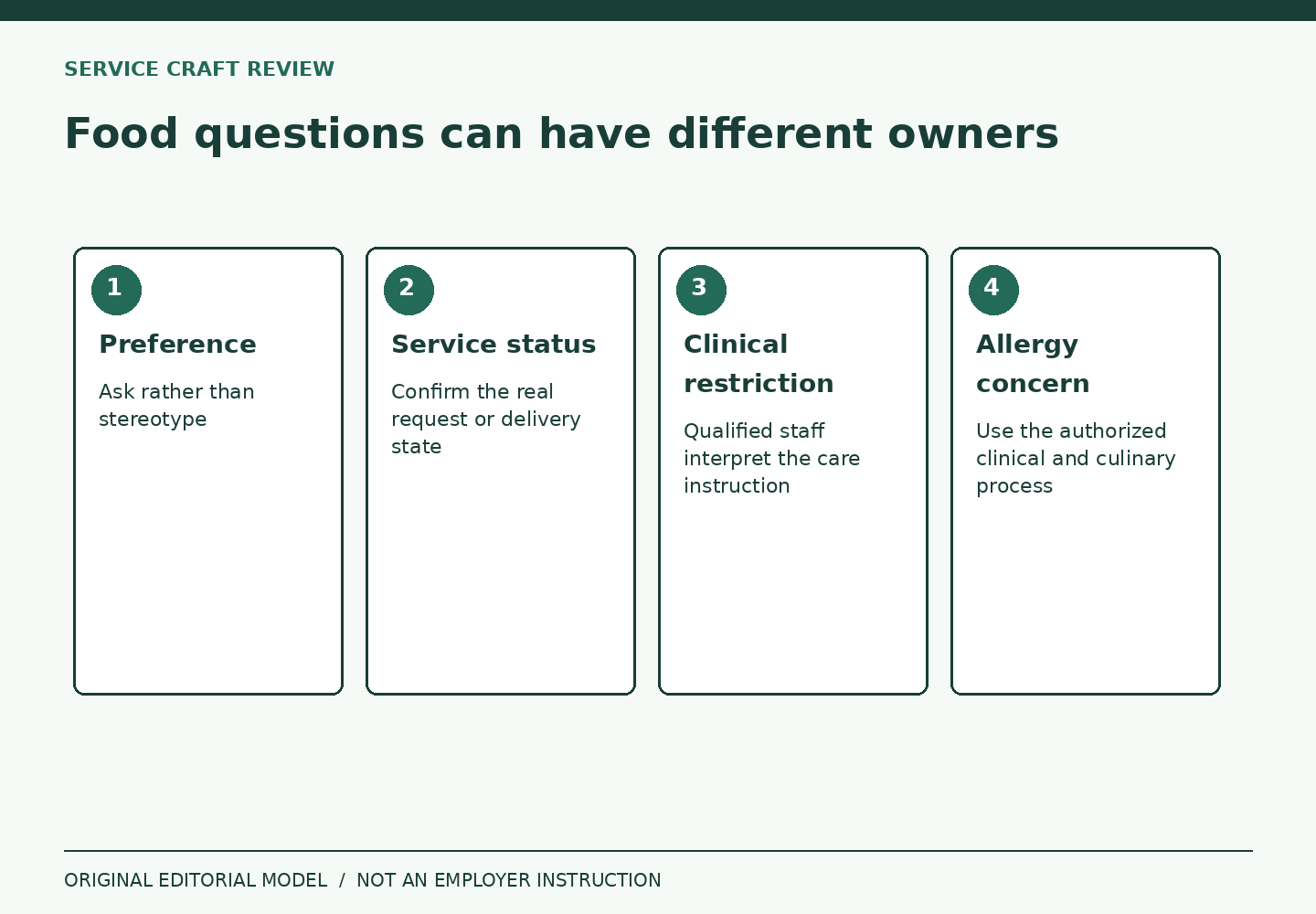
Clarify what is being asked A missing tray, a preference, an allergy concern and a prescribed diet are different matters. Follow your training and the current service process to determine the responsible route. This article does not recommend foods, assess allergies or interpret a clinical restriction.
Northwell's public culinary page describes hospitality and nutrition-related work. It does not provide the live menu, patient-specific diet or substitution rules for a facility. Use the authorized culinary and clinical sources for those questions.
Respect preference without guessing its meaning Ask the person what they need within the approved process. A cultural, religious or personal preference should not be inferred from appearance or a surname. AHRQ's culture guidance supports attention to individual context rather than stereotypes.
Do not promise that a requested item is available or suitable until the responsible team confirms it. A familiar ingredient name is not enough to establish allergy safety or compatibility with a prescribed diet.
Keep the clinical boundary clear If the request involves swallowing, medication, fasting, an allergy or a medical restriction, use the qualified care-team route. Do not offer a workaround from personal experience. A service delay does not authorize changing an instruction.
An original example: a person asks whether they can replace an item on a tray. The employee uses the approved process to contact the responsible team rather than deciding that the substitution is harmless. The answer depends on information the service employee may not have authority to interpret.
Close with the actual status Tell the person what request was made and what response is confirmed. “I have asked the culinary team” is different from “your replacement is coming.” If the route is blocked, follow the designated escalation rather than making an unsupported promise.
A respectful food-service conversation can be warm and precise. It recognizes the importance of the request while leaving availability, preparation and clinical suitability with the people responsible for those decisions.
Sources and scope
Public sources checked October 5, 2026. Dated accounts remain historical; examples and planning methods in this article are original editorial constructions.
- Northwell: Culinary careers
Public context for culinary and hospitality work; actual menus, diets, allergy handling and service instructions remain with authorized teams.
- AHRQ: Consider Culture
General guidance to attend to individual preferences and context without stereotyping.