In this guide
- Identify the actual status question The person may want to know whether they are in the right place, whether a request was received, whether a team has been notified or when something will happen. Ask enough to distinguish those questions. Do not request a full clinical explanation when the issue is a destination or administrative status.
- Say what the evidence supports “Your request has been sent through the approved route” describes an action. “The receiving team has accepted it” describes a different state. “The appointment will start in ten minutes” is a timing promise and should not be offered unless the responsible process supports that statement. Avoid substituting confidence for evidence.
- Acknowledge inconvenience without explaining what you do not know You can recognize that waiting is difficult while leaving the cause uncertain. Do not blame another department, speculate about staffing or disclose someone else's situation to justify a delay. A private operational detail is not made appropriate simply because it would explain the wait.
- Give a bounded next step Explain what the actual process allows you to do now: check the approved status source, contact the responsible team or use the designated escalation. If a follow-up time is genuinely agreed, state it accurately. If you cannot promise one, say so without inventing a schedule.
- Correct an earlier overstatement promptly If you gave information that turns out to be wrong, provide the verified correction through the appropriate channel. Do not defend the original estimate by adding another unsupported explanation. Tell the service owner if the misunderstanding reveals a process problem.
- Sources and scope
Waiting becomes harder when the information is vague. A person may hear “soon” several times without knowing whether anyone has checked the request. Nonclinical service staff can improve the conversation by distinguishing what is known from what remains uncertain. The aim is useful information, not a prediction that the desk cannot support.
A public Northwell patient-access role description includes scheduling and related administrative work, while the customer-service description emphasizes communication. These are role descriptions, not a universal permission to access every record or give every status update. Follow your current assignment and approved process.
Identify the actual status question The person may want to know whether they are in the right place, whether a request was received, whether a team has been notified or when something will happen. Ask enough to distinguish those questions. Do not request a full clinical explanation when the issue is a destination or administrative status.
If the person raises a new urgent health or safety concern, use the local emergency or clinical escalation process. Do not keep the conversation in an ordinary waiting-time category because that is how it began. This article does not teach symptom assessment.
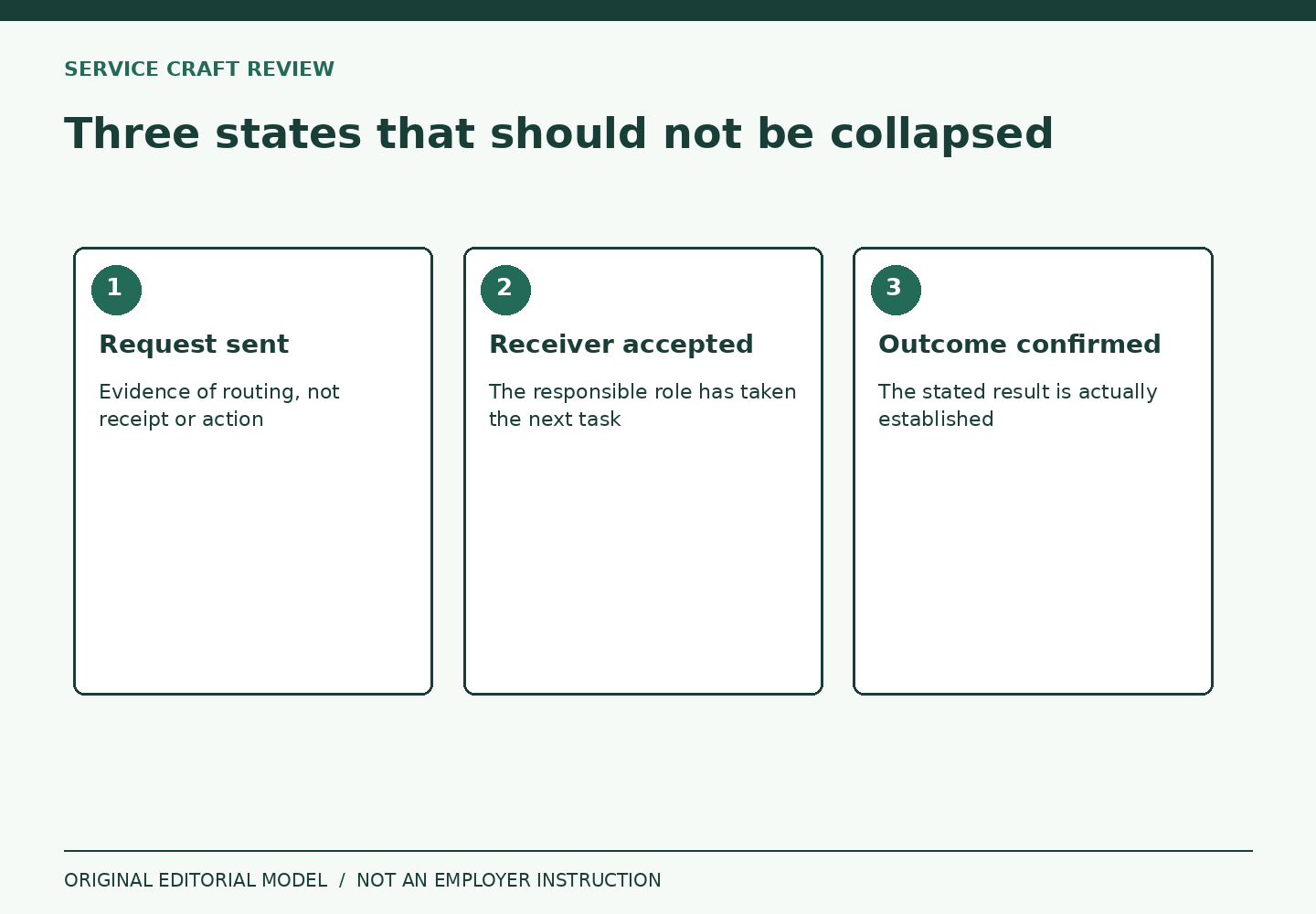
Say what the evidence supports “Your request has been sent through the approved route” describes an action. “The receiving team has accepted it” describes a different state. “The appointment will start in ten minutes” is a timing promise and should not be offered unless the responsible process supports that statement. Avoid substituting confidence for evidence.
An original example: a desk employee can see that a message was routed but cannot see a clinical team's readiness. The useful update states the routing status and follows the approved next step. It does not infer that the person is next or that the delay has a particular cause.
Acknowledge inconvenience without explaining what you do not know You can recognize that waiting is difficult while leaving the cause uncertain. Do not blame another department, speculate about staffing or disclose someone else's situation to justify a delay. A private operational detail is not made appropriate simply because it would explain the wait.
Use ordinary language and an appropriate communication format. If the person cannot hear or understand the update, repeating the same wording may not help. Use the authorized language or accessibility support rather than guessing what will work.
Give a bounded next step Explain what the actual process allows you to do now: check the approved status source, contact the responsible team or use the designated escalation. If a follow-up time is genuinely agreed, state it accurately. If you cannot promise one, say so without inventing a schedule.
A request sent is still open until the relevant process establishes its next state. Keep any required record in the approved system. Do not create a personal list of patient names and worries because the official queue is inconvenient.
Correct an earlier overstatement promptly If you gave information that turns out to be wrong, provide the verified correction through the appropriate channel. Do not defend the original estimate by adding another unsupported explanation. Tell the service owner if the misunderstanding reveals a process problem.
Trust is better served by an accurate limit than by repeated reassurance that fails. A good waiting update leaves the person with a clearer understanding of the known status, the responsible route and the next action that has actually been taken.
Sources and scope
Public sources checked October 5, 2026. Dated accounts remain historical; examples and planning methods in this article are original editorial constructions.
- Northwell: Customer Service Representative, Melville
Official role description directly retrieved October 5, 2026: calls, documented procedures, escalation and communication with practices. It is not a local procedure or a guarantee that a vacancy remains open.
- Northwell: Senior Patient Access Services Representative
Public description separates registration, scheduling and insurance-related duties; actual permissions and procedures are role-specific.