In this guide
- Use the local immediate-response process If there is immediate danger, follow current workplace instructions and alert the appropriate response team. Do not wait for an ordinary service report or this publication's tool. This article does not determine whether a substance, surface or area is safe.
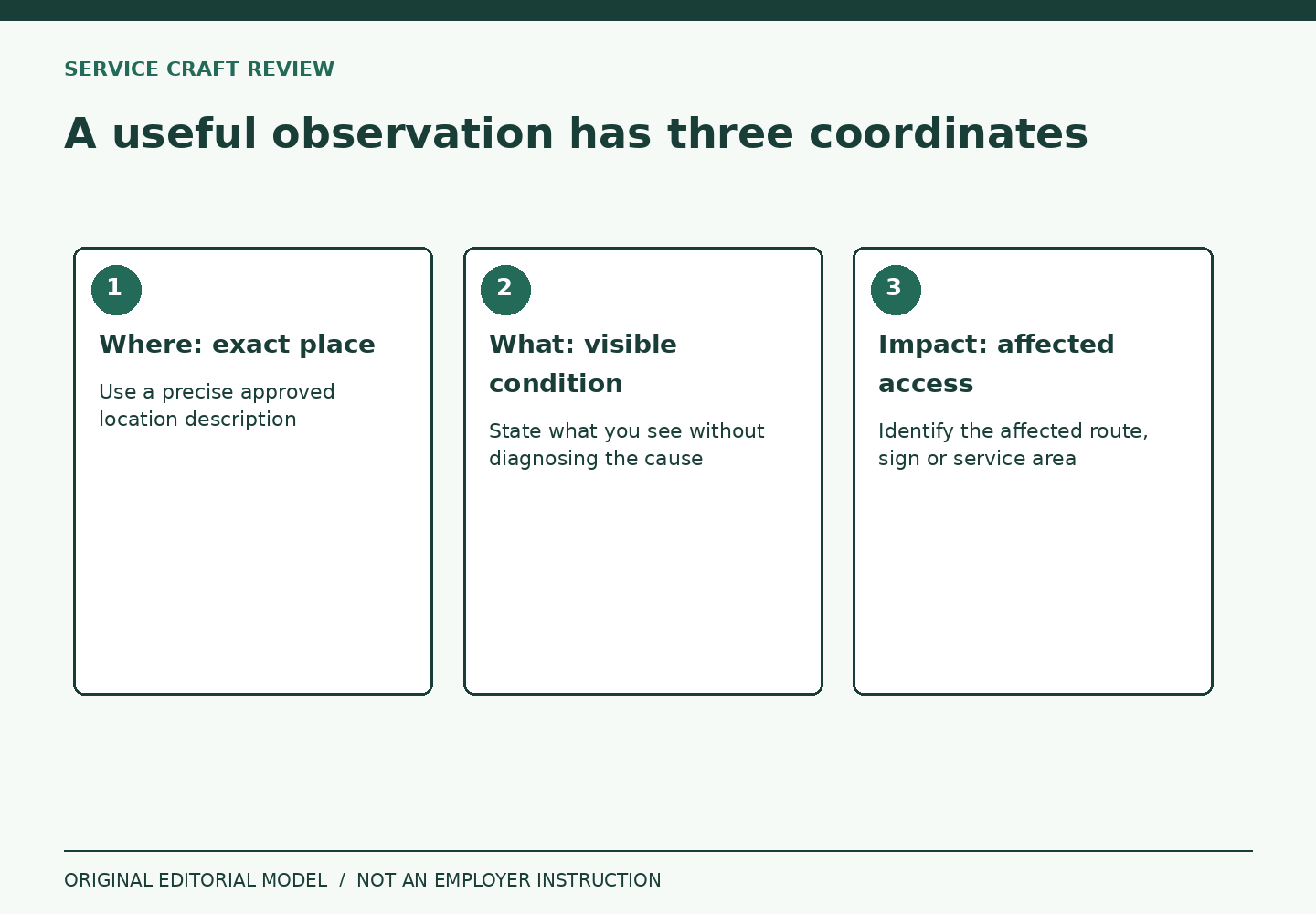
- Describe what is visible Give the exact place using the approved location convention and state what you can observe. “Liquid is visible near the entrance” is different from identifying it as a particular substance without evidence. “The route is obstructed by an object” is more useful than a vague claim that the area is unsafe.
- Identify the service impact Within your knowledge, explain whether a route, seat, sign or entrance is affected. Do not promise that the area will reopen or that a team will arrive at a particular time unless confirmed. If visitors need another route, use the current approved information and assistance process.
- Confirm the report's state A concern sent through a system may still be unassigned. Follow the local process for escalation and status, especially if the condition changes. Do not mark a task resolved because someone said they would look at it.
- Sources and scope
A visitor may point out a spill, a damaged chair or a blocked route to whichever employee is nearby. The employee's job may be to alert the responsible team, not to diagnose the material, repair the object or perform a cleaning task. A clear observation can help without crossing that boundary.
Use the local immediate-response process If there is immediate danger, follow current workplace instructions and alert the appropriate response team. Do not wait for an ordinary service report or this publication's tool. This article does not determine whether a substance, surface or area is safe.
Northwell's public Environmental Services Aide description refers to established procedures and labeled supplies. It does not authorize other staff to use chemicals, handle waste or improvise cleaning. The actual task belongs to trained and assigned personnel.
Describe what is visible Give the exact place using the approved location convention and state what you can observe. “Liquid is visible near the entrance” is different from identifying it as a particular substance without evidence. “The route is obstructed by an object” is more useful than a vague claim that the area is unsafe.
Avoid adding patient information or photographing people to make the report compelling. Use the approved reporting system and its instructions for any images. A public screenshot or personal message can create a separate privacy issue.
Identify the service impact Within your knowledge, explain whether a route, seat, sign or entrance is affected. Do not promise that the area will reopen or that a team will arrive at a particular time unless confirmed. If visitors need another route, use the current approved information and assistance process.
An original example: a sign has fallen so the destination is unclear. The report identifies the sign's location and the missing direction. The employee does not mount a homemade replacement that could contradict the official wayfinding system.
Confirm the report's state A concern sent through a system may still be unassigned. Follow the local process for escalation and status, especially if the condition changes. Do not mark a task resolved because someone said they would look at it.
This is a service-observation skill, not a technical assessment. The clearer the place and visible condition, the easier it is for the authorized team to decide what action is appropriate.
Sources and scope
Public sources checked October 5, 2026. Dated accounts remain historical; examples and planning methods in this article are original editorial constructions.
- Northwell: Environmental Services Aide
Public role description refers to established cleaning procedures; this publication supplies no cleaning, chemical or infection-control instruction.
- Northwell: Non-clinical careers
Public context for the breadth of support work, not a list of permissions or a current job offer.